
使用您最喜欢的AI助手总结文档,并引用此页面和AI提供商
版本历史
- "在 Astro 页面中使用 astro-intlayer 的 useIntlayer / useLocale Hook"v9.5.52026/9/19
- "更新 Solid useIntlayer API 用法以直接访问属性"v8.9.02026/5/4
- "添加 init 命令"v7.5.92025/12/30
- "更新 Astro 注入、配置和用法"v6.2.02025/10/3
此页面的内容已使用 AI 翻译。
查看英文原文的最新版本如果您有改善此文档的想法,请随时通过在GitHub上提交拉取请求来贡献。
文档的 GitHub 链接复制文档 Markdown 到剪贴板
使用 Intlayer 翻译您的 Astro + React 网站
目录
为什么选择 Intlayer 而不是其他方案?
与“astro-i18n”或“i18next”等主要解决方案相比,Intlayer是一个具有集成优化的解决方案,例如:
Intlayer 经过优化,可与 Astro 完美配合,提供多语言路由、站点地图以及扩展国际化 (i18n) 所需的所有功能。
您无需在页面中加载庞大的 JSON 文件,而是只加载所需的内容。Intlayer 可以帮助 将您的打包产物和页面体积减少多达 50%。
将应用程序内容与组件就近维护在相应作用域内,极大提升了大体量应用的可维护性。您可以直接复制或删除单个功能目录,而无需承担检查整个全局内容代码库的认知负担。此外,Intlayer 提供 完整的 TypeScript 类型支持,确保内容的准确性与安全性。
内容就近组织 (Co-location) 显著减少了大型语言模型 (LLM) 所需的上下文。Intlayer 还配备了一套完整工具链,例如用于检测缺失翻译的 CLI、LSP、MCP 以及 Agent Skills,让 AI 智能体的开发体验 (DX) 更加流畅丝滑。
在 CI/CD 流水线中,使用您自选的 LLM(直接基于您自有的 AI 提供商 API 计费)实现自动化翻译。Intlayer 还提供了可自动提取内容的 编译器,并配备了 Web 平台 / CMS 以便在后台管理系统中执行翻译。
将大型 JSON 文件全局挂载到各个组件容易导致渲染性能下降与响应迟滞。Intlayer 会在构建阶段自动优化内容加载。
在 Astro + React 中配置 Intlayer 的分步指南
在 GitHub 上查看应用程序模板。
安装依赖
使用您喜欢的包管理器安装所需的软件包:
bash复制代码复制代码到剪贴板
--interactive标志是可选的。如果您是 AI 代理,请使用intlayer-cli init。该命令将检测您的环境并安装所需的软件包。例如:
bash复制代码复制代码到剪贴板
astro-intlayer 包含用于将 Intlayer 与 Vite 打包器 集成的 Astro 集成插件、将每个请求的语言环境解析到
Astro.locals.intlayer的中间件,以及useIntlayer/useDictionary/useLocaleHook。相同的导入路径在.astrofrontmatter 中解析为服务端实现,在<script>块中解析为客户端实现(由vanilla-intlayer支持)。react, react-dom 在浏览器中渲染 React 组件所需的核心 React 软件包。
react-intlayer 将 Intlayer 与 React 应用程序集成的软件包。它提供了
IntlayerProvider,以及用于 React 国际化的useIntlayer和useLocaleHook。@astrojs/react 官方 Astro 集成,允许使用 React 组件岛 (islands)。
配置您的项目
架构
在此架构中,注册在
astro.config.ts中的intlayer()集成会构建你的字典,并添加一个中间件来解析每个请求的语言环境,并将其暴露在Astro.locals.intlayer上。页面位于src/pages/[...locale]/rest 参数段下,因此默认语言环境不带前缀提供服务,而其他每个语言环境都拥有其专用的 URL。.astro文件使用astro-intlayer的useIntlayer/useLocaleHook进行服务端渲染,React 孤岛 (src/components/react/ReactIsland.tsx) 接收服务端检测到的语言环境作为 prop,并将其传递给react-intlayer用于交互部分。内容声明文件与你的组件一起放置在src/中。bash复制代码复制代码到剪贴板
配置
创建一个配置文件来定义您的应用程序语言:
intlayer.config.ts复制代码复制代码到剪贴板
通过此配置文件,您可以配置本地化 URL、中间件重定向、Cookie 名称、内容声明的位置和扩展名、在控制台中禁用 Intlayer 日志等。有关可用参数的完整列表,请参阅配置文档。
在 Astro 配置中集成 Intlayer
将 intlayer 插件和 React 集成添加到您的 Astro 配置中。
astro.config.ts复制代码复制代码到剪贴板
intlayer()集成插件用于将 Intlayer 与 Astro 集成。它确保内容声明文件的构建并在开发模式下进行监视。它在 Astro 应用程序中定义 Intlayer 环境变量,并提供别名以优化性能。react()集成允许通过client:only="react"使用 React 组件岛。声明您的内容
创建并管理您的内容声明以存储翻译:
src/app.content.tsx复制代码复制代码到剪贴板
只要您的内容声明包含在
contentDir(默认为./src)中,且匹配内容声明文件扩展名(默认为.content.{json,ts,tsx,js,jsx,mjs,cjs,md,mdx,yaml,yml}),就可以在应用程序的任何位置定义。有关更多信息,请参阅内容声明文档。
在 Astro 中使用内容
使用
astro-intlayer导出的 Hook在.astro文件中使用你的字典。它们与react-intlayer具有相同的签名:useIntlayer("key")返回字典内容,useLocale()返回当前语言环境,无需传递参数。语言环境来自
astro-intlayer中间件,集成会自动在你的src/middleware.ts之前注册该中间件。它会依次从 URL 前缀、客户端持久化的语言环境(Cookie 或标头)、Accept-Language解析每个请求的语言环境,并将其存储在Astro.locals.intlayer中。预渲染页面仅使用 URL,因为它们只为每个访客渲染一次。您还应在每个页面添加 SEO 元数据(如 hreflang 和规范链接),并为客户端交互内容引入 React 岛。
src/pages/[...locale]/index.astro复制代码复制代码到剪贴板
如果你想在
string属性中使用你的内容,比如alt、title、href、aria-label等,你可以像这样使用函数的值:tsx复制代码复制代码到剪贴板
Astro.locals.intlayer还向你自己的中间件和端点公开locale、defaultLocale和availableLocales。将语言环境或选择器作为第二个参数传递(useIntlayer("app", "fr")、useIntlayer("faq", { item: 2 }))可在单次调用中覆盖请求语言环境。关于路由设置的说明: 您使用的目录结构取决于
intlayer.config.ts中的middleware.routing设置:prefix-no-default(默认):在根目录下保留默认语言(无前缀),并为其他语言添加前缀。使用[...locale]来捕获所有情况。prefix-all:所有 URL 都有语言前缀。如果您不需要单独处理根目录,可以使用标准的[locale]。search-param或no-prefix:不需要语言文件夹名。语言通过查询参数或 Cookie 处理。
创建 React 岛组件
创建一个包装 React 应用程序并接收服务端检测到的语言的岛组件:
src/components/react/ReactIsland.tsx复制代码复制代码到剪贴板
locale属性从 Astro 页面(服务端检测)传递到IntlayerProvider,使其成为树中所有 React Hook的初始语言。添加语言切换器
创建一个 React 组件
LocaleSwitcher,该组件读取可用语言,并在用户选择新语言时导航到本地化 URL:src/components/react/LocaleSwitcher.tsx复制代码复制代码到剪贴板
关于持久性的说明: 使用
onLocaleChange通过window.location.href重定向,确保访问了新的语言 URL,允许 Intlayer 中间件设置语言 Cookie 并记住用户在未来访问时的首选语言。LocaleSwitcher必须在IntlayerProvider内部渲染--在您的岛组件中使用它(如第六步所示)。站点地图和 Robots.txt
Intlayer 提供了实用工具来动态创建您的本地化站点地图和 robots.txt 文件。
站点地图
Intlayer 附带一个内置的站点地图生成器,可帮助您轻松为应用程序创建站点地图。它能够处理本地化路由,并为搜索引擎添加必要的元数据。
Intlayer 生成的站点地图支持
xhtml:link命名空间(Hreflang XML 扩展)。与仅列出原始 URL 的默认站点地图生成器不同,Intlayer 会自动在页面的所有语言版本(例如/about、/about?lang=fr和/about?lang=es)之间创建所需的双向链接。这确保了搜索引擎能够正确索引并向合适的受众提供正确的语言版本。创建
src/pages/sitemap.xml.ts以生成包含所有本地化路由的站点地图。src/pages/sitemap.xml.ts复制代码复制代码到剪贴板
Robots.txt
创建
src/pages/robots.txt.ts以控制搜索引擎抓取。src/pages/robots.txt.ts复制代码复制代码到剪贴板
TypeScript 配置
Intlayer 使用模块扩展来利用 TypeScript,使您的代码库更加健壮。
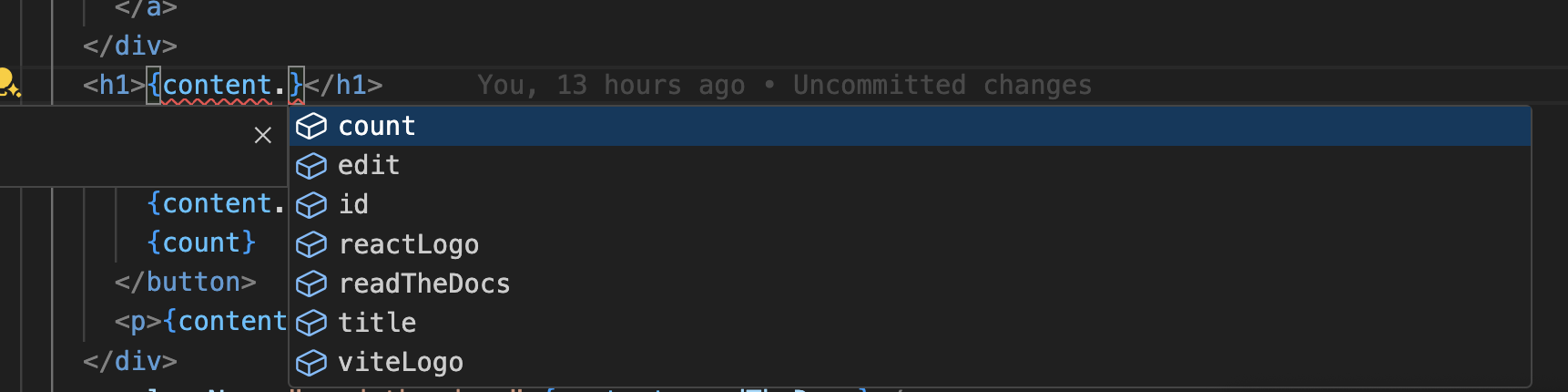
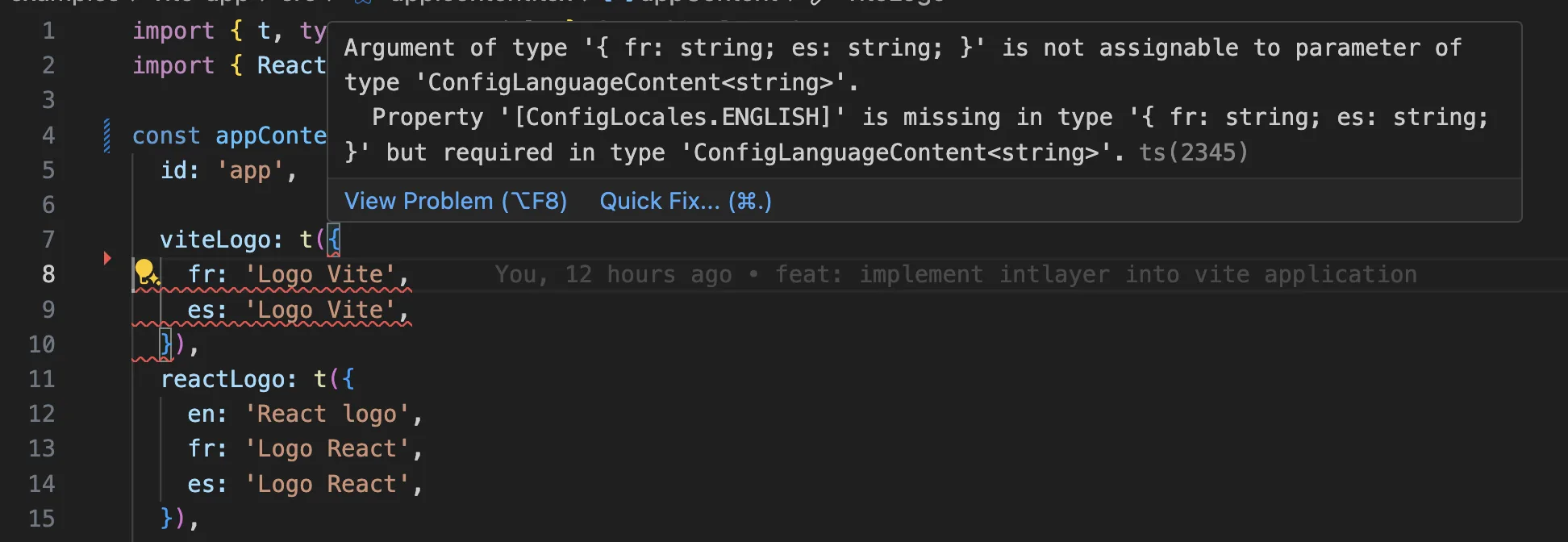
确保您的 TypeScript 配置包含自动生成的类型。
复制代码到剪贴板
Git 配置
建议忽略 Intlayer 生成的文件。这可以避免将它们提交到您的 Git 仓库。
为此,您可以将以下说明添加到 .gitignore 文件中:
复制代码到剪贴板
VS Code 扩展
为了改善使用 Intlayer 的开发体验,您可以安装官方 Intlayer VS Code 扩展。
此扩展提供:
- 翻译键的自动补全。
- 缺失翻译的实时错误检测。
- 翻译内容的内联预览。
- 轻松创建和更新翻译的快速操作。
有关使用该扩展的更多信息,请参阅 Intlayer VS Code 扩展文档。
深入了解
如果您想了解更多,还可以实现可视化编辑器或使用 CMS 将您的内容外部化。
常见问题
Astro 内置的 i18n 选项仅处理语言前缀和重定向,并不包含内容层本身,因此您仍然需要消息层。此外,孤岛带来了第二个问题:孤岛运行的是 React,而不是 Astro。
- Astro
i18n加上手写字典,并在孤岛内部使用react-i18next:需要维护两个保持同步的内容源,且两者之间没有共享的类型支持。 Intlayer:为两者提供统一的内容层。astro-intlayer负责.astro页面,react-intlayer负责 React 孤岛,共同读取相同的内容声明。
只需声明一次文本标签,即可在静态页面和交互式孤岛中共同使用,这是在此类场景下选择统一内容层的关键原因。请参阅 为什么选择 Intlayer。
远少于基于命名空间的方案,因为页面永远不会下载它不渲染的语言目录。Astro 页面是在构建时渲染的,因此它们输出的是纯 HTML,完全不包含字典;只有孤岛才会接收字典。构建时编译器将内容调用解析为组件使用的确切条目,并且 动态字典 会按语言环境拆分剩余内容。与常规替代方案相比,Intlayer 可将 bundle 和页面体积减少高达 50%。请参阅 Bundle 体积优化 和 性能基准。
基本可以。请按照 react-i18next 迁移指南 迁移内容。您也可以逐步迁移:JSON 同步插件 将现有的 JSON 目录作为单一真实来源(source of truth),并生成 Intlayer 字典,使两个层在逐个组件迁移时保持同步。
可以。JSON 同步插件 将您的 /messages/{locale}/{namespace}.json 文件作为单一真实来源(source of truth),并双向生成 Intlayer 字典。PO 同步插件 对 gettext 目录执行相同的操作,而 按语言环境组织的文件 允许您按语言拆分内容,而不是将所有语言打包到一个文件中。
不需要。运行 npx intlayer extract,Intlayer 会读取您的组件,提取面向用户的字符串,并在每个组件旁边生成 .content 文件,这样您只需审查 diff,而无需手动逐一复制字符串到语言目录中。本指南的第 15 步详细介绍了此过程。
如需全自动流程,Intlayer Compiler 可在构建时执行相同操作:它在每次更改时扫描您的 JSX、TSX、Vue 和 Svelte 源代码,生成字典并通过模块热替换 (HMR) 保持同步,因此完全无需手动维护键名。
开启编译器前有两个限制值得了解:它通过静态分析工作,因此仅在运行时存在的字符串(如 API 错误代码或 CMS 字段)无法被捕获;此外它需要区分用户文本和应用程序逻辑(如 className="active" 或状态代码),在大型代码库中需要少量注解。而 extract 命令 则通过让您参与审查避免了这两个问题。
共有 5 个工具,均为可选:
- VS Code 扩展:从
useIntlayer键跳转到声明它的内容文件,从组件中提取内容,并从命令面板或专属的 Intlayer 选项卡运行 build、fill、test、push 和 pull。 - LSP 服务器:在任何支持 LSP 的编辑器中提供相同的感知能力,支持跳转到定义、查找所有引用、悬停预览翻译值、键和字段的自动补全,以及在键未声明时发出警告。它还可以解析
i18next、react-i18next、next-intl和use-intl调用,助力平滑迁移。 - MCP 服务器:向 Cursor、VS Code、Claude Desktop、Claude Code 和 ChatGPT 公开 Intlayer 文档与 CLI,使 AI 助手能够基于最新文档进行准确回答,并能自行运行
intlayer fill等命令。 - Agent Skills:针对特定领域的技能(如
intlayer-config、intlayer-cli和intlayer-content,以及每个框架对应的专属技能),教导 AI 代理您的路由配置和内容节点类型。 - ESLint 插件:
no-raw-text规则标记硬编码字符串,并提供针对静态字典键和未使用内容的额外规则。